
I Travel Hundreds of Kilometres to Run Sound. I Also Get Motion Sickness on Every Trip.

The irony isn’t lost on me.
I spend my working life calibrating systems that have to perform precisely under pressure. I troubleshoot RF in crowded spectrum environments. I mix artists in front of thousands of people without flinching. By professional requirement, I stay composed when things go wrong.
And then I get into a car for a three-hour outstation drive, and my body turns against me within forty minutes.
Motion sickness. Not the dramatic kind you see in movies, with sudden emergencies or pulling over. It’s just a slow, grinding nausea that starts behind my eyes, moves into my throat, and stays there for the rest of the journey like an uninvited passenger. By the time I reach the venue, I’m not at my best. I’m just managing.
I’ve been doing this for over ten years. I have worked events in cities all over India, taking flights, overnight trains, early morning cabs through mountain roads, and tempo travellers packed with gear and crew. I’ve often found myself wedged between a rack case and the window, trying to read a stage plot on my phone.
Motion sickness has been present for most of it. Here’s what I’ve learned.
Why It Happens
Your inner ear is tracking motion. Your eyes, if you’re looking at something stationary—a phone, a document, the seat in front of you—tell your brain you’re not moving. The sensory conflict between these two signals is what causes nausea.
For some people, this conflict is barely noticeable. For others, it’s debilitating. I’m somewhere in the middle: functional but uncomfortable. In some ways, that’s worse than being severely affected, because those people stop trying to work in the vehicle. I keep trying, which only makes it worse.
Reading a stage plot on a moving car is, it turns out, one of the worst things I can do for my body.
The Things That Actually Help
I want to be clear that I’ve tried most of the suggestions you’ll find online. Some of them are mildly useful. Some of them do nothing. A few have genuinely changed how I travel.
Sit in the Front, Always
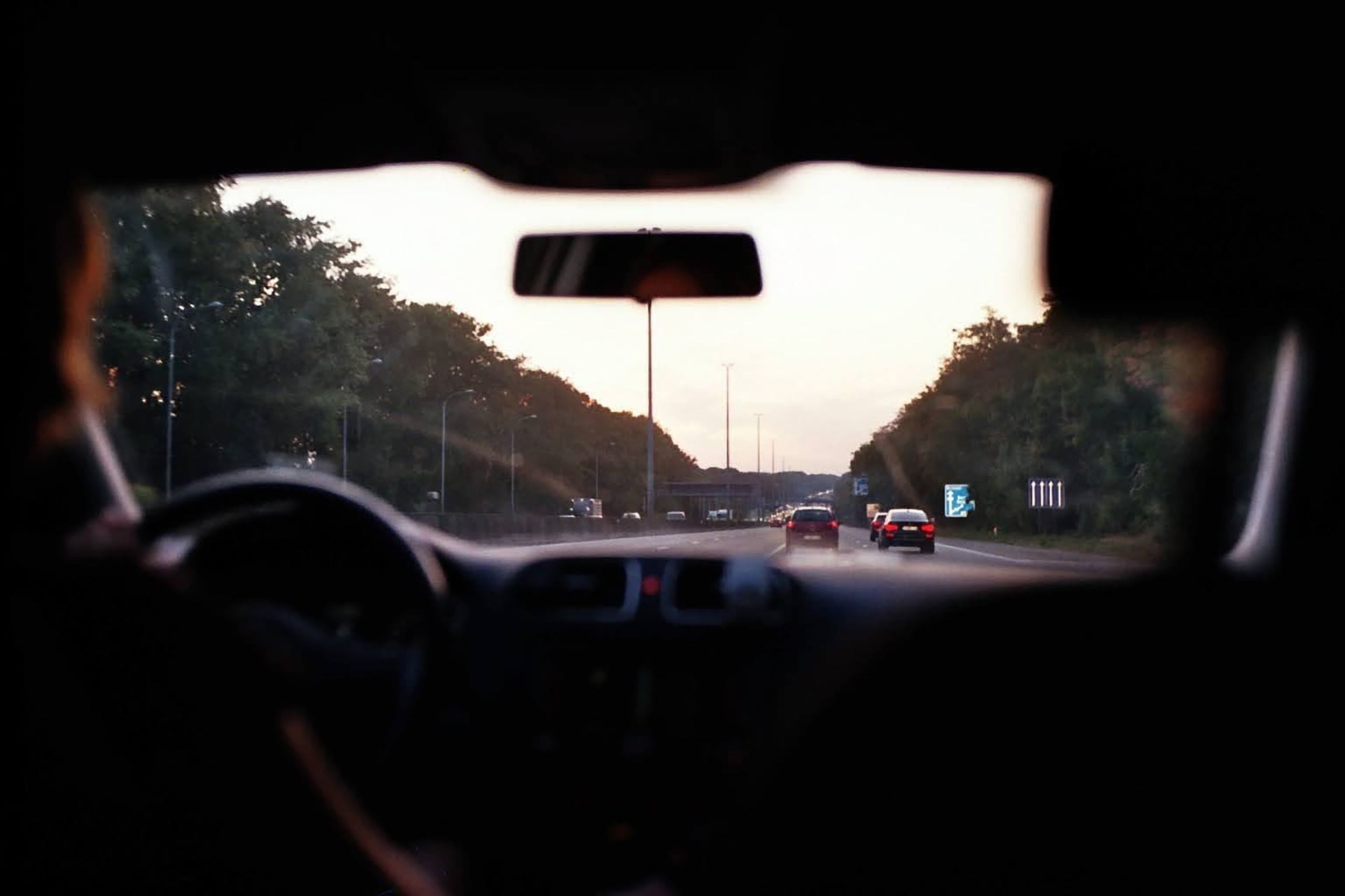
This is non-negotiable for me now. Front seat, eyes on the road ahead. Your vestibular system and your visual system agree on what’s happening: the car is moving, the world outside is moving, and the signals match. The nausea either doesn’t start or starts much later.
On crew vehicles where the front seat goes to whoever calls it first, I call it first every time. I’ve had to explain this to crew members who thought I was being picky. I’ve stopped caring about that.
Don’t Look at a Screen in a Moving Vehicle
I know. The drive to an outstation event is exactly when you want to review the set list, answer the client’s questions about the run of show, or check the stage plot one more time.
Do it before you leave. Or do it when you arrive. A moving vehicle with a phone screen in your hand is where my productivity dies, and my nausea starts its shift.
I now do all my pre-event document review either at home before departure or at the venue after I’ve had fifteen minutes to recalibrate. The work gets done. It just doesn’t get done in the car anymore.
Ginger — Specifically, Not Generally
Ginger as a motion sickness remedy sounds like something your grandmother might recommend and you politely ignore. I ignored it for years. Then I tried it properly—not ginger biscuits, not ginger-flavoured candy, but actual ginger. A small piece of raw ginger about thirty minutes before a long journey, or concentrated ginger capsules if you want something you can carry easily.
The evidence for ginger specifically preventing motion sickness is mixed. For me, however, it has become part of the routine I use before difficult journeys.
I carry ginger capsules in my EDC bag now. Between that and the front seat rule, a significant percentage of my road travel has become manageable rather than something to endure.
Accupressure Wristbands
I was sceptical. I’ll be honest, I still am, at least a little. The evidence on acupressure wristbands for motion sickness is mixed. Some studies support it, some don’t, and the effect size isn’t huge.
But I’ve worn them on long drives and noticed a difference, and placebo or not, arriving at a venue in better condition than I would have otherwise is the actual goal. They’re inexpensive, compact, and fit in a bag. If they help even partially, that’s enough.
The Overnight Train Option
When I have a choice between a long road journey and an overnight rail journey in India, with its steady rhythm, the chance to look out across a wide horizon instead of a narrow windscreen, and the ability to lie flat, is much easier on my system than road travel. I arrive rested and without nausea, ready to work.
The logistics are more complicated. You have to plan, book early, and coordinate gear separately. But for longer outstation events where the geography allows, the train isn’t the least efficient option. It’s the option that gets me to the event in better shape.
Medication as a Last Resort
Antihistamine-based motion sickness tablets are widely available in India. Avomine is the common one. They work, but they also make me drowsy in a way that’s hard to shake off even after arrival. That’s a real problem when you’re expected to be sharp at FOH three hours after getting out of a vehicle.
I use them only when the journey is unavoidable and long, and on terrain I know will be bad, like mountain roads, poorly maintained roads, or anything winding. I don’t use them as a routine solution.
If you’re considering medication, talk to a doctor about what works for your system and what the timing looks like relative to when you need to be alert. The drowsiness window varies by person and by medication. Don’t discover this for the first time on the way to a large event.
The Harder Part: Managing It with Clients
The motion sickness itself is manageable. The professional optics of it are occasionally awkward.
You’re in a vehicle with the client or senior production staff, quietly trying to keep your nausea from becoming visible while they want to discuss tomorrow’s event. You’re not fully present for the conversation. You’re doing the thing where you focus on a fixed point on the horizon and answer questions with more words than necessary to cover the fact that you’re buying yourself recovery time between sentences.
I’ve stopped pretending it isn’t a thing. If I’m travelling with a client I trust, I mention it early: “I do better in the front seat, motion sickness.” It’s never once been a problem. People are accommodating when you’re direct. The discomfort of admitting it is less than the discomfort of arriving at a venue visibly impaired and trying to set up a rig.
The events industry runs on composure. But composure doesn’t mean pretending your body doesn’t have limits. It means knowing your limits well enough to manage around them professionally.
That same idea of staying composed under pressure is something I’ve written about from the perspective of live sound in The Best Mix Is the One Nobody Notices.
What I’ve Accepted
After ten years, I’ve stopped expecting this to go away. Some bodies are just wired this way. Mine is one of them.
What I’ve built instead is a system: front seat, no screens, ginger before departure, wristbands on long routes, train when possible, and medication only when nothing else works. It’s not a cure. It’s a framework that gets me to the venue in functional condition instead of needing to recover. When I arrive, and the rig goes up, and the system comes to life, and the first line check sounds clean — none of the journey matters anymore.
That part, I’ll take every time.
